
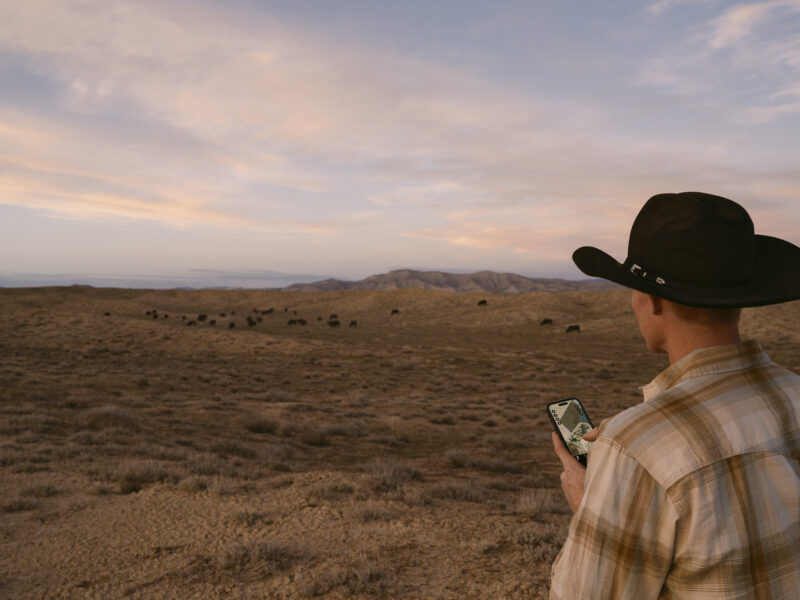
Seventy miles. That’s how far Lloyd Calvert’s cattle can be from home base at The High Lonesome Ranch in western Colorado. For years, finding them meant days on horseback, multiple cowboys, and a lot of guesswork. Now he pulls out his phone.
The High Lonesome Ranch spans 225,000 acres of complex terrain, including varying elevations, climates, and vast stretches of rangeland that no cell tower has ever reached. It’s exactly the kind of operation that virtual fencing was built for, but until recently couldn’t fully use it.
Halter’s direct-to-satellite connectivity has changed that, significantly expanding access to virtual fencing across the United States. By enabling smart cattle collars to communicate directly with satellites in partnership with T-Mobile and powered by Starlink, ranchers can now manage cattle anywhere.
The impact of direct-to-satellite virtual fencing
Before Halter, much of The High Lonesome Ranch’s land was simply out of reach. Physical fences could only go so far across thousands of acres of complex terrain, leaving large stretches ungrazed and unmanaged. Some pastures spanned up to 17,000 acres, and locating cattle within them could take days on horseback, with no guarantee of success.
Now, every cow is visible. “We can see the cattle no matter where they are, all across the ranch. No matter where I am, I can see what they’re doing,” says Lloyd, the ranch’s livestock and agricultural manager.
The difference goes beyond knowing where the herd is. Virtual fencing gives ranchers a tool to better manage their land, making it possible to rotate pastures with intention, rest overgrazed areas, and protect sensitive terrain that physical fencing could never reach. For a ranch like The High Lonesome, that means land that has been unused for years is now actively managed and contributing to the operation.
The impact is felt throughout every aspect of the ranch — from gathering cattle to land regeneration. “It gives us the ability to manage them more tightly with less labor and ensure better animal health and better land health simultaneously with less resources,” Lloyd explains.
Because they’re able to manage their land better, ranchers are also spending less on feed, labor, and permanent fencing while running more cattle on the same acres. Better grazing means better nutrition and more weight gain. And with GPS tracking from a smartphone, ranchers get time back for family and the parts of the business that matter most.
The next era of virtual fencing
The High Lonesome Ranch is one example of what becomes possible when connectivity is no longer the barrier. Across the American West, millions of acres of remote rangeland have historically sat outside the reach of virtual fencing — too vast, too rugged, or too far from a cell tower for the technology to be practical.
Direct-to-satellite connectivity changes that equation entirely. For ranchers navigating labor shortages, rising costs, and the demands of managing land in an era of intensifying drought and wildfire risk, virtual fencing is no longer a tool reserved for certain operations. It’s now within reach for virtually any ranch that can see the sky.
If you would like to learn more, visit halterhq.com
